
Flagship project
Advancing Uzbekistan's Renewable Energy Auction Programme
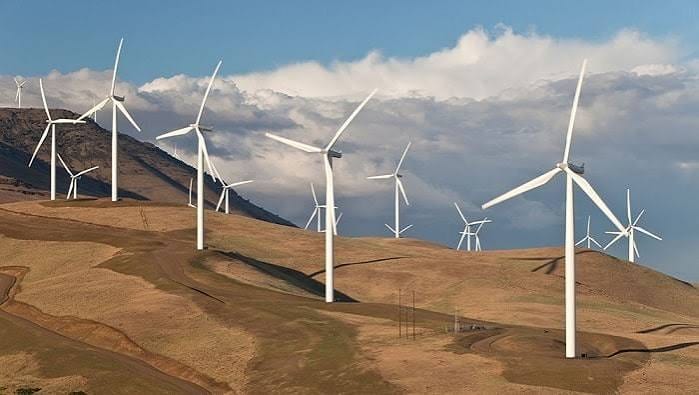
Across Phases II and III, Uzbekistan's renewable-energy auction programme progressed from evidence-based wind-site selection to competitive procurement planning for 250-1,000 MW of wind, solar and battery storage.
The challenge
Scaling a renewable-energy auction from wind-only development to a combination of wind, solar and battery storage introduces increasingly complex site, grid, commercial and environmental decisions. Uzbekistan needed a consistent evidence base for comparing locations, defining grid-evacuation and storage requirements, allocating risk and preparing bidding conditions that credible investors could evaluate on comparable terms.
Our goal
Phases II and III aimed to build a transparent pipeline of investable renewable-energy projects that supports Uzbekistan's national targets. Phase II focused on selecting credible wind sites and preparing a fair procurement process. Phase III expanded the programme to 250-1,000 MW of wind, solar and battery storage, with investor selection and project structuring carried through to financial close.
Our approach
Phase II screened 20 locations countrywide and ranked six priority sites after comparing wind resource, layouts, energy yield, grid evacuation, costs, financing and legal considerations. These findings informed tender documents, bidder information and evaluation. Phase III broadened the methodology to wind, solar and storage: site and resource studies guide layouts, evacuation solutions and battery sizing; environmental and social work includes bird and bat assessment; and cost analysis, procurement documents, bid support and stakeholder workshops connect project preparation with award and financing.
Impact in numbers
Together, the phases strengthen the basis for competitive private investment in Uzbekistan's renewable-energy programme. Better-prepared sites and well-defined tender conditions can lower bidder uncertainty and associated risk premiums, while giving public authorities a defensible basis for project selection. The expansion from wind to a mixed portfolio of wind, solar and battery storage supports both clean generation and system flexibility. Environmental and social safeguards help identify development conditions early, and a pathway to financial close can convert selected bids into investable projects with clearer delivery responsibilities. The programme also supports Uzbekistan's stated objective of reaching 21% renewable energy by 2031.
Key highlights
- The programme established a clear progression from site selection to hybrid auction design.
- Phase II narrowed 20 candidate locations to six priority wind sites through a transparent evaluation of resource quality, network access and project economics.
- Phase III introduced a potential 250-1,000 MW portfolio combining wind, solar and battery storage according to system needs.
- Storage is incorporated into the auction architecture, while biodiversity and safeguard studies sit alongside engineering, commercial and procurement preparation.
- Different lead partners supported the two phases: Synergy Consulting in Phase II and EY in Phase III.
Success story
Uzbekistan's auction programme shows how each phase can build on the last. Phase II began by looking beyond wind speed: 20 locations were tested against grid access, cost, legal and financing conditions, and six moved forward for deeper preparation. This gave authorities and investors a shared picture of the opportunities. Phase III took the next step, asking how wind, solar and battery storage could work together as useful system assets. Resource, evacuation and battery studies are linked with biodiversity safeguards, commercial structuring and transparent bidding requirements. The result is a more mature route from renewable potential to accountable investment - one that can expand clean electricity, add flexibility to the power system and give future projects a stronger foundation for delivery.