
Flagship project
Expanding Demand-Driven Vocational Training across Jordan
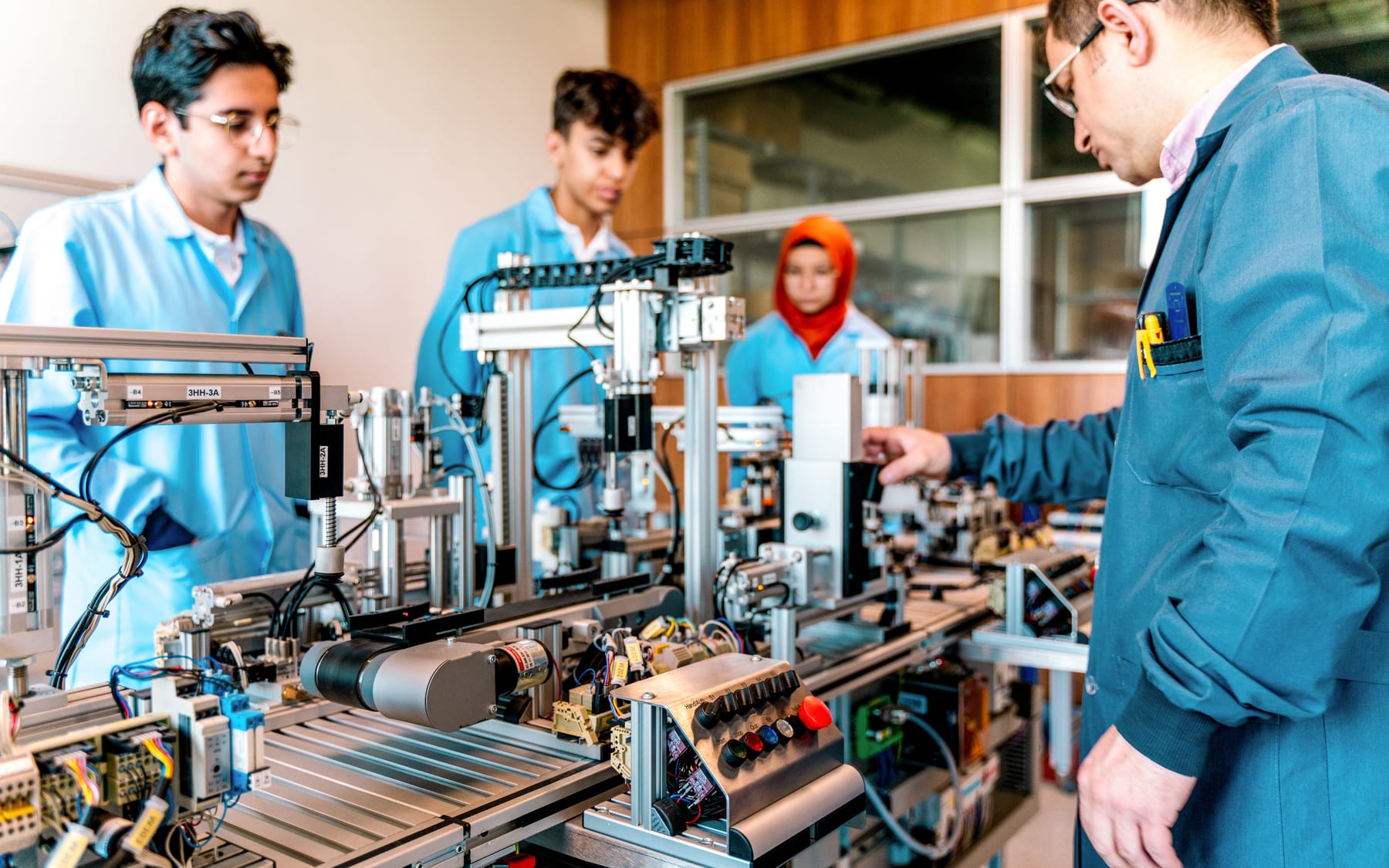
Jordan's second TVET phase upgrades vocational institutes, equipment and curricula so that affordable training responds more closely to labour-market needs.
The challenge
Young people need practical qualifications that employers recognise, while training institutions must keep programmes, facilities and equipment aligned with changing demand. Seven institute branches and one campus require coordinated improvement so that access, teaching quality and organisational capability advance together.
Our goal
The programme aims to expand affordable, demand-driven vocational education in Jordan and improve the prospects of learners entering skilled employment. It will strengthen the institutions, training content and physical environments needed to provide relevant programmes across several locations.
Our approach
Seven Vocational Training Institute branches and the CAVT campus are being rehabilitated and equipped. Curriculum development runs alongside infrastructure so that new spaces support updated training content. Institutional capacity building and stakeholder engagement connect providers with the needs of learners, employers and the public bodies responsible for vocational education.
Impact in numbers
Modern facilities and relevant curricula can give learners a stronger route into skilled occupations while helping employers find people trained for current needs. Affordable access broadens the social value of the programme, and stronger institutions are more capable of keeping courses responsive after the investment ends. The intended result is a more useful and accessible vocational-training network.
Key highlights
- The multi-site programme combines eight training locations within one quality framework.
- Rehabilitation and equipment address the practical setting, curricula shape what learners study and capacity building supports the organisations delivering it.
- Dialogue with stakeholders helps training choices reflect real demand rather than assumptions about employment.
Success story
A learner's experience of vocational education is shaped by several things at once: the condition of the workshop, the relevance of the curriculum, the instructor's capacity and the connection to employers. Jordan's second phase brings those elements together across seven branches and the CAVT campus. Instead of treating refurbishment as the finished result, the programme links upgraded spaces with equipment, training content and institutional development. Stakeholder engagement adds a further safeguard by keeping attention on demand. When these pieces align, a young person can enter an affordable course that teaches skills with practical value, and an employer can place greater confidence in the qualification. That is how a network of buildings can become a stronger pathway to work.