
Flagship project
Shaping Gabon's Electricity Future
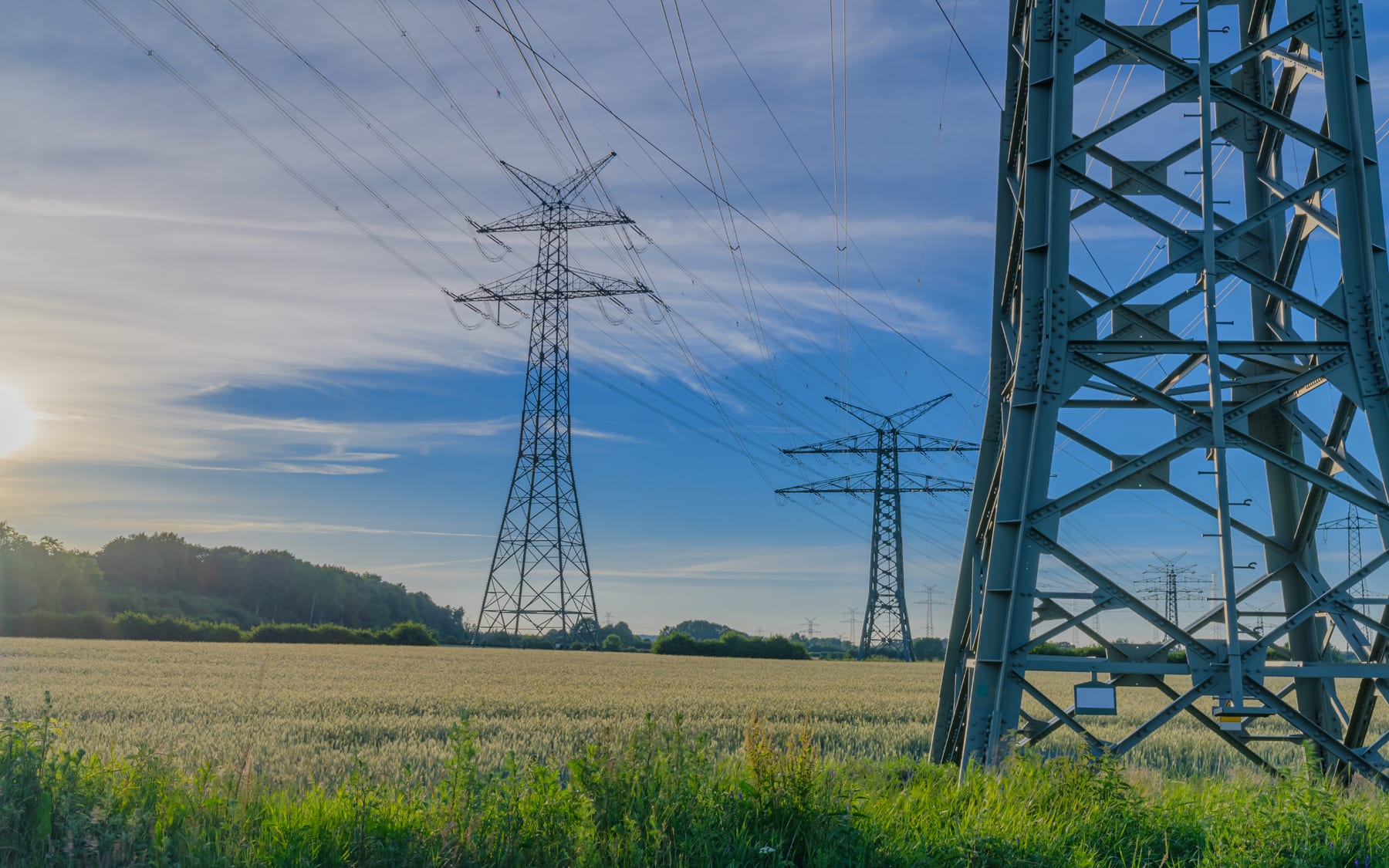
Gabon's 2045 electricity master plan will connect demand scenarios, least-cost investments and network development within one long-term pathway for the sector.
A shared master plan can help Gabon direct resources towards investments that work together and arrive when the system needs them. Clearer priorities may reduce avoidable costs, improve service planning and strengthen dialogue with financiers. Training also allows national institutions to update assumptions and use the planning tools as conditions evolve.
The challenge
Decisions on generation and networks must anticipate two decades of economic change, demand growth and regional opportunity. Without a common long-term model, investments risk being poorly sequenced, more costly than necessary or unable to serve evolving needs across generation, transmission and distribution.
Our goal
PASBAP is preparing an integrated master plan that will guide Gabon's electricity system through 2045. It aims to identify reliable and affordable development choices, clarify priority investments and give public decision-makers a transparent basis for coordinating future projects and finance.
Our approach
Demand is assessed under multiple scenarios from 2025 to 2045 before generation options, regional interconnections and network needs are compared. Least-cost planning and power-system simulations test how alternatives perform. Financing strategies, carbon-credit opportunities and project prefeasibility sheets translate the preferred pathway into practical next steps, supported by institutional training.
Key highlights
- The assignment spans the complete electricity value chain rather than producing separate plans for generation and grids.
- Scenario modelling reveals how choices change under different futures, while prefeasibility sheets give priority schemes a concrete form.
- Financial and carbon-market analysis broadens the discussion from engineering need to investment viability.
Success story
Long-term energy planning is most valuable when it helps today's decision-makers understand the consequences of tomorrow's uncertainty. Gabon's study tests different demand paths, supply options and network configurations instead of treating one forecast as inevitable. It can show where an interconnection changes the least-cost solution, when a transmission reinforcement becomes urgent or which priority project merits deeper preparation. Financial analysis and carbon-credit opportunities then add a view of how the pathway might be funded. With training, the model can remain a working institutional resource rather than a static report. The resulting master plan offers Gabon a disciplined way to sequence electricity investments while retaining the flexibility to respond to new evidence.