
Flagship project
Supporting Colombia’s Transition to a Circular Economy
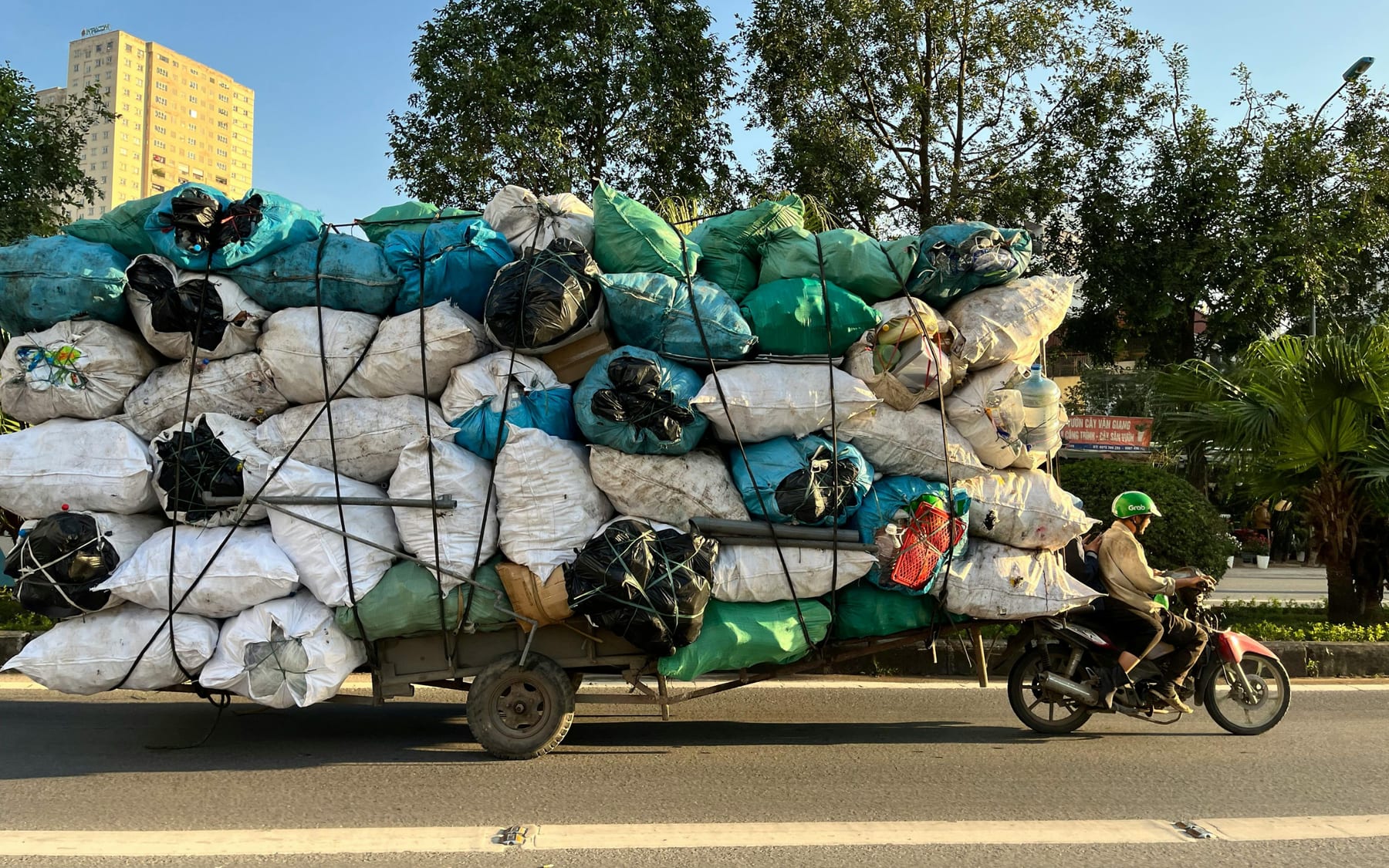
Across two phases, Colombia's Green Jobs programme helps cities turn circular-economy policy into better recycling systems, inclusive employment and climate-focused local action.
The challenge
Colombia's cities are generating growing volumes of waste while municipal systems and markets still struggle to recover materials consistently. Waste pickers already perform much of the collection and sorting, yet formalisation and safer employment have advanced slowly. Cities also need stronger data, planning instruments and public-private coordination to select circular solutions that reduce emissions and create viable green jobs.
Our goal
PREVEC brings Colombia's circular-economy transition into cities by improving recycling, strengthening municipal and national frameworks, and creating better conditions for green employment. Across both phases, the programme connects material recovery with social inclusion, gender-responsive planning and climate action, allowing experience from one group of cities to guide the next.
Our approach
Phase I built the operational foundation through waste-flow data in Bogotá, Cúcuta, Villavicencio and Ibagué, a municipal circular-economy strategy and solid-waste observatory in Cúcuta, training, public awareness, pilot collection activities and business-model support. Phase II carries the learning into Cali and Cartagena through greenhouse-gas prioritisation tools, digital data management, planning instruments, public-private coordination, competitive circular-economy proposals, green-jobs and Just Transition measures, training and knowledge exchange. An exit strategy in Cúcuta helps institutionalise earlier approaches.
Impact in numbers
By linking recycling systems with inclusion, PREVEC makes waste recovery more visible as both an environmental service and a source of employment. The first phase equipped cities with data and tools, gave Cúcuta a stronger institutional framework, supported waste-picker organisations through tailored formalisation measures, and moved composting and sorting business models into implementation. Phase II extends this progress through climate- and gender-responsive planning, support for small and women-led enterprises, employment instruments and training for public and private actors. The combined programme creates a practical pathway from local pilots to solutions that can be standardised, financed and replicated across Colombian cities.
Key highlights
- Concrete first-phase results include waste-flow evidence across four cities; a circular-economy strategy, pilot source-separation and collection system, solid-waste observatory and six waste-picker formalisation measures in Cúcuta; business models for composting and sorting; and national proposals for a waste catalogue and standardised data.
- The second phase builds on this base in Cali and Cartagena with a greenhouse-gas calculator, four planning or management instruments, stronger coordination with business, competitive circular-economy proposals and the replication of ten good practices.
Success story
In Cúcuta, the circular-economy transition became a practical city process rather than an abstract policy. PREVEC made waste streams and collection routes more visible through data, supported a municipal strategy and introduced a pilot combining awareness, source separation, collection and marketing. A solid-waste observatory now provides regular reporting, while six accompanying measures addressed waste-picker formalisation through route mapping, accounting skills, occupational certification and workplace health and safety. Business models for composting and sorting connected inclusion with new economic activity. Phase II carries these lessons into Cali and Cartagena, adding greenhouse-gas prioritisation, gender-responsive planning, green-jobs measures and public-private delivery. Its lasting value lies in continuity: local experience becomes a platform for stronger livelihoods, cleaner material cycles and circular solutions that other Colombian cities can adapt.