
Flagship project
Sustainable Urban Mobility in Tbilisi
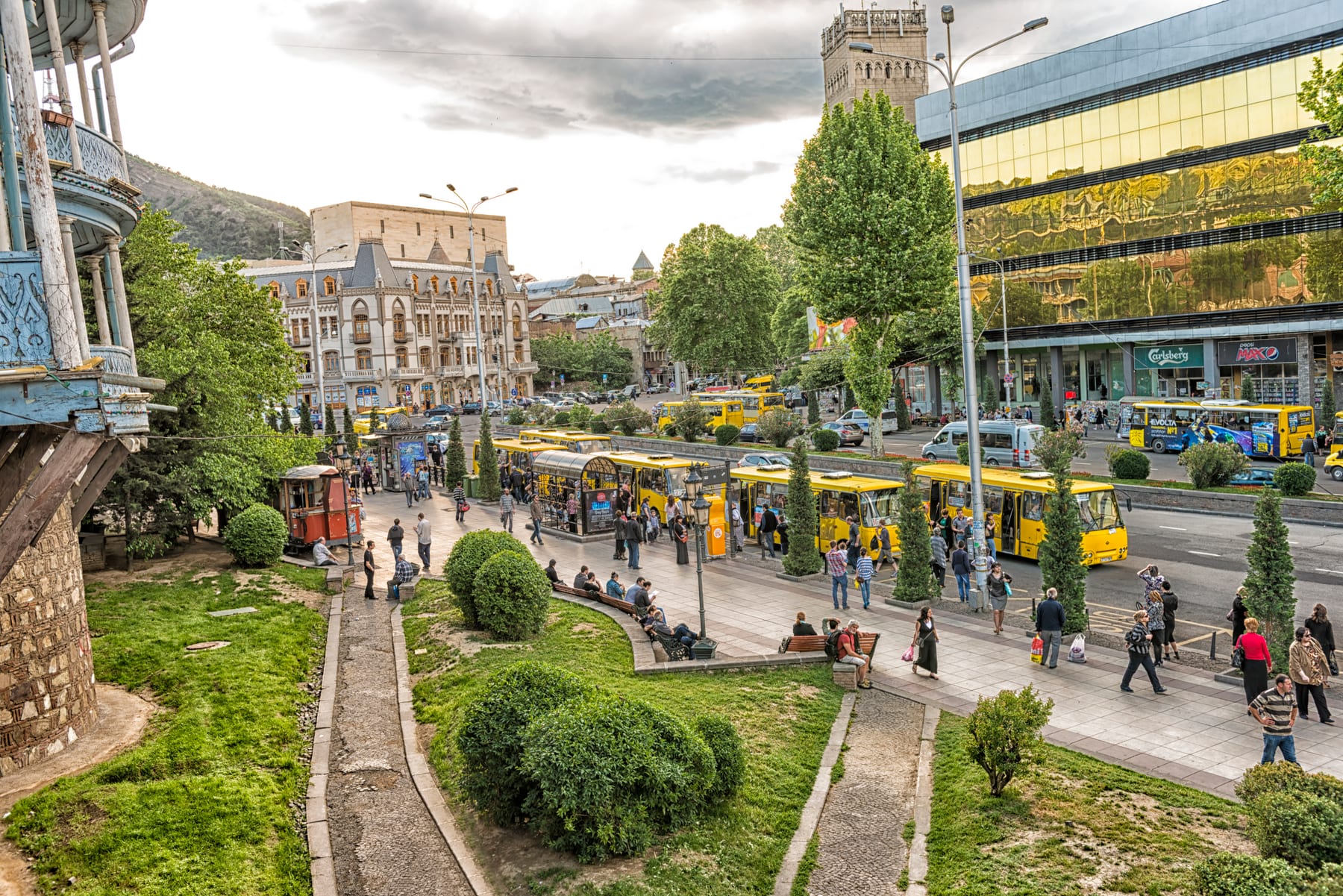
Tbilisi's sustainable urban mobility programme brings planning, infrastructure and implementation together to support cleaner, safer and more accessible movement across the city.
Residents and visitors can benefit from cleaner public transport, safer streets and mobility options that are easier to access. Reduced pressure from private-car use may improve travel reliability and the quality of urban space. City institutions gain practical capability in managing large sustainable-mobility investments, which can support later improvements. Tbilisi gains both practical mobility improvements and the institutional experience to sustain a safer, cleaner and more accessible transport system.
The challenge
Rapid urbanisation and growing private-car use are placing increasing pressure on Tbilisi's transport network and the quality, safety and accessibility of everyday mobility. Isolated infrastructure measures will not resolve these pressures unless planning, public transport, street design, safeguards and implementation are treated as one connected mobility programme.
Our goal
Tbilisi's programme reshapes everyday mobility around attractive public transport, safer streets and improved accessibility. It aims to deliver practical improvements while giving city institutions the studies, designs and implementation experience required to manage a complex urban transport investment.
Our approach
Initial project set-up establishes governance and delivery arrangements. Mobility and infrastructure studies inform detailed planning and design, followed by environmental and social management and competitive procurement. Construction supervision protects quality during implementation, and stakeholder engagement keeps users and affected communities connected to decisions throughout the programme.
Key highlights
- The work follows a continuous route from mobility evidence to built infrastructure.
- It will generate detailed designs, procurement packages, supervised construction and engagement records, all supported by environmental and social management.
- By retaining oversight across these stages, the programme can respond when planning assumptions meet real site conditions.
Success story
In a growing city, mobility shapes whether people can reach work, education and services safely and on time. Tbilisi's programme treats that challenge as a connected system rather than a collection of isolated road schemes. Travel patterns and infrastructure needs are studied, solutions are designed in detail and procurement turns those plans into implementable contracts. Safeguards and public engagement keep attention on the people affected, while supervision protects quality during construction. The change sought will be experienced in daily life: public transport that is more attractive, streets that feel safer and a city that offers more accessible choices than the private car. Stronger municipal delivery experience can sustain that progress beyond the current investment.