
Flagship project
Delivering Serbia's 158.4 MW Čibuk 1 Wind Farm
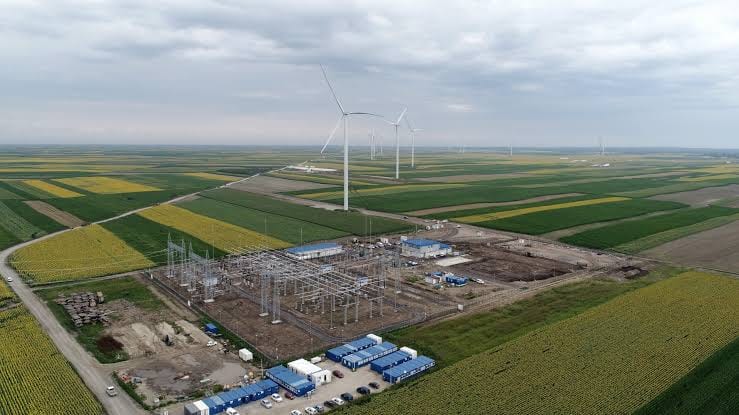
Čibuk 1 brought 57 wind turbines and their grid infrastructure into one 158.4 MW renewable-energy development in Serbia.
The challenge
A utility-scale wind farm requires turbines, roads, buried cables, substations and a high-voltage connection to be delivered as one functioning asset. Schedule, lender requirements, environmental obligations and grid interfaces had to be managed consistently across a large construction site and several EPC workstreams.
Our goal
Čibuk 1 was developed to add 158.4 MW of wind capacity to Serbia's electricity system through a project capable of meeting international technical, environmental and social standards. The scheme also needed a reliable 400 kV route for transferring generation to the grid.
Our approach
Owner's Engineering combined project controls with design review, EPC supervision and health and safety oversight. Turbines, foundations, approximately 86 kilometres of 35 kV cable, substations and an 11-kilometre 400 kV overhead line were coordinated through construction and grid connection. EBRD and IFC requirements informed environmental and social management.
Impact in numbers
Čibuk 1 expanded Serbia's renewable-generation capacity and created a major operating wind asset connected at high voltage. Coordinated engineering and supervision helped protect construction quality and compliance across the complete site. The project also contributes valuable practical national experience in successfully delivering and reliably operating large, internationally financed wind developments.
Key highlights
- Fifty-seven turbines, each rated at 2.8 MW with a 110-metre hub height, form the generating plant.
- The extensive internal cable network gathers output before the substation and 400 kV line deliver it to the wider system.
- Strong project controls linked turbine installation with the often less visible balance-of-plant works.
Success story
A wind farm is often photographed as a line of turbines, yet its ability to generate depends on infrastructure spread across the whole site. At Čibuk 1, foundations support 57 machines, roads provide access, buried cables collect electricity and substations raise the voltage before an 11-kilometre line reaches the grid. Project controls and engineering oversight connected those elements to one delivery schedule. Environmental, social and safety requirements also shaped how construction progressed. When the final system was ready, Serbia gained not simply installed turbines but a 158.4 MW power plant whose internal networks and grid connection were designed to work together. That integrated delivery is what turns wind across the landscape into dependable renewable electricity.