Flagship project
Self-Employment of Women in the Private Health Sector (Punjab and Khyber Pakhtunkhwa)
The project aimed to enable unemployed women of lower income groups in the provinces of KP and Punjab who have been trained as health service providers to work profitably and independently in providing sexual and reproductive rights-related health services, thus increasing availability of medical services for improved reproductive health in medically underserved areas for the population of the two provinces while contributing to economic empowerment of women.
The challenge
Despite having been trained as community mid-wives, nurses and lady health visitors, many women in rural Pakistan remain unemployed and unable to access resources with which to render much need healthcare services to their under-served communities.
Our goal
Enable and empower these trained but unemployed health service providers to work profitably and independently in providing sexual and reproductive rights-related health services through the commercial operation of small clinics, supported by private Social Franchising organizations, and through provision of accompanying social marketing measures, enable these women to build a sustainable economic existence and to contribute to the economic development of their region and the country.
Our approach
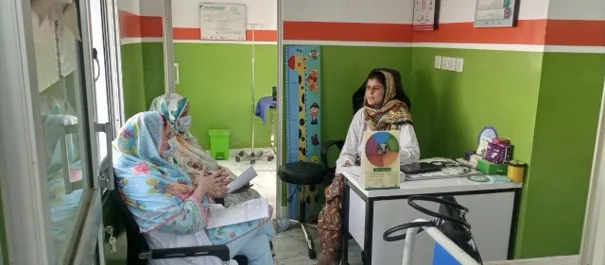
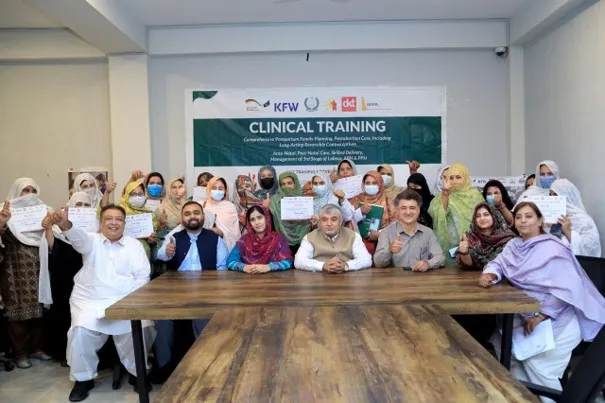
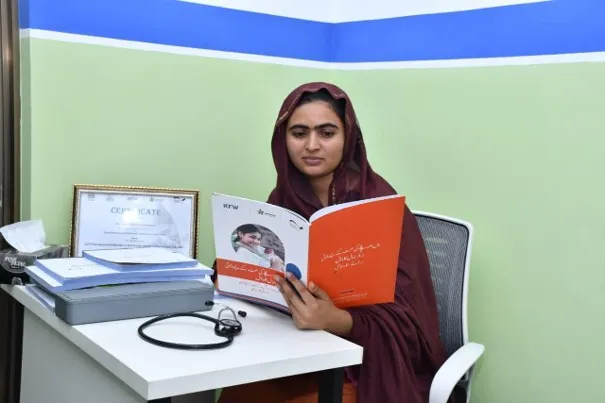
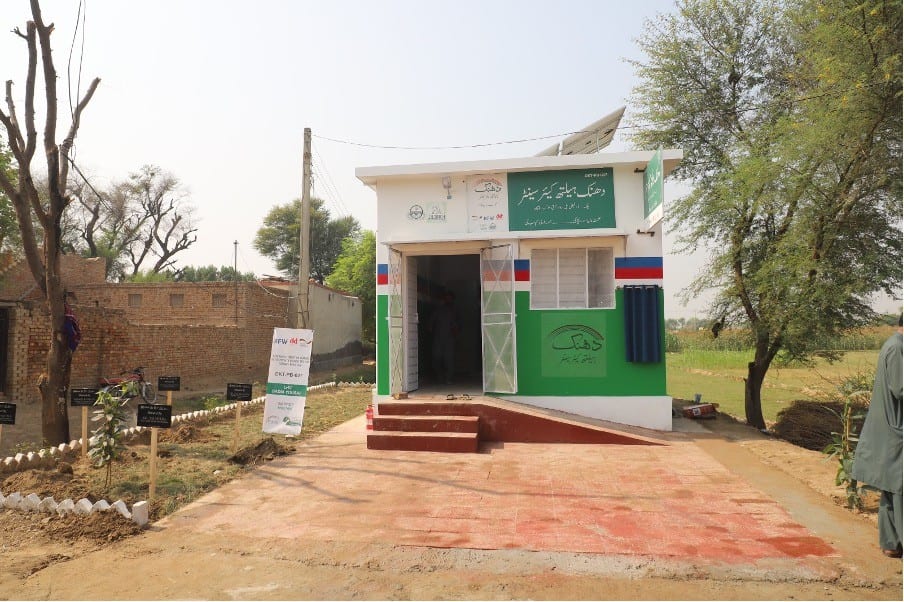
400 trained, but unemployed, health service providers with access to land were provided with equipped 1-room clinics, as well as with family planning commodities and practical training in order to provide health services as Clinic Operators under the supervision of private Social Franchising organisations. Training topics included: Integrated care/continuum of care; Health system resilience; Gender equality and social inclusion in family planning services; Clinical quality management in SRHS provision; Social Behaviour Change & Communication (SBCC). Capacity building was also provided to Department of Health officials, including provision of an online learning platform.
Impact in numbers
Trained but unemployed female health service providers in under-served areas were provided with equipped clinics from which family planning and reproductive health services could be rendered, using subsidised commodities made available by social franchising organisations. Sustainable economic empowerment of the female service providers contributed to improved access to health services for the surrounding communities, while training strengthened the clinical capacity of the health service providers and the managerial capacity of Department of Health staff.
Key highlights
- Construction and equipment of 400 one-room clinics, including 30 mobile container clinics, with solar power and septic and water tanks as necessary
- Clinical and managerial training of clinic operators and Department of Health officials
- Creation of an electronic learning platform, including six custom-made courses
- Provision of advisory services in social behaviour change and communication
- General project management, reporting and management of the project's disposition fund
- Monitoring and evaluation, including through a Remote Monitoring Management and Verification platform, and progress reporting
- Development of concepts for a subsequent financing phase
Voices from the field
We are fortunate to have this clinic in our village. It provides essential services and alleviates the financial burden previously faced. This clinic is vital for the survival of my children and me.
Impressions