Flagship project
Building Climate-Responsive Council Centres across Lesotho
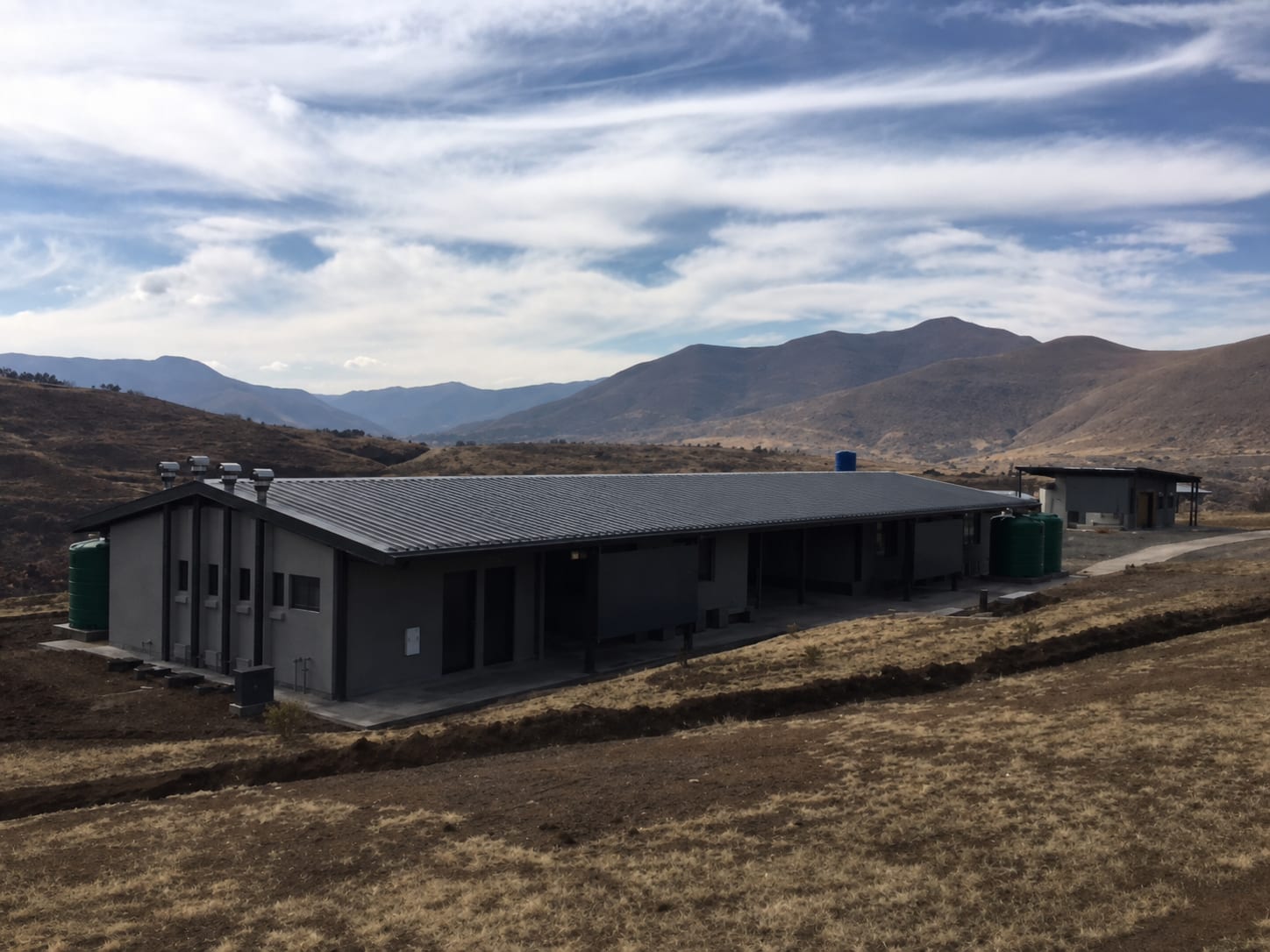
Lesotho's second LGIIP phase developed 28 climate-responsive council centres to bring local administration, participation and public services closer to communities.
The challenge
New local councils needed functional places to meet residents and deliver decentralised services, often in locations with limited utilities and demanding climatic conditions. Buildings had to be affordable, maintainable and locally appropriate rather than dependent on complex systems that councils could not sustain.
Our goal
LGIIP II aimed to provide 28 councils with practical centres that support public participation and everyday local administration. The programme also sought to demonstrate architecture suited to Lesotho's climate, resources and operational realities while strengthening community ownership.
Our approach
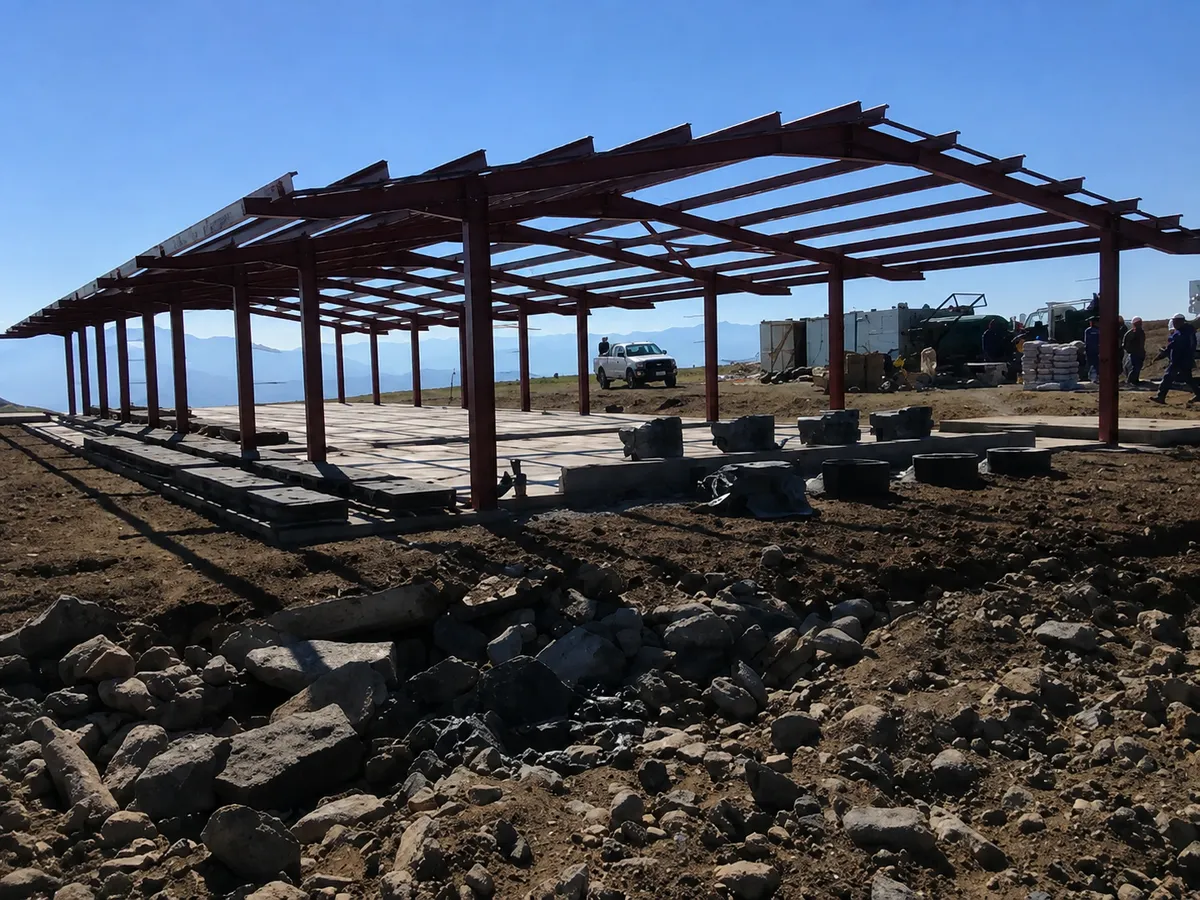
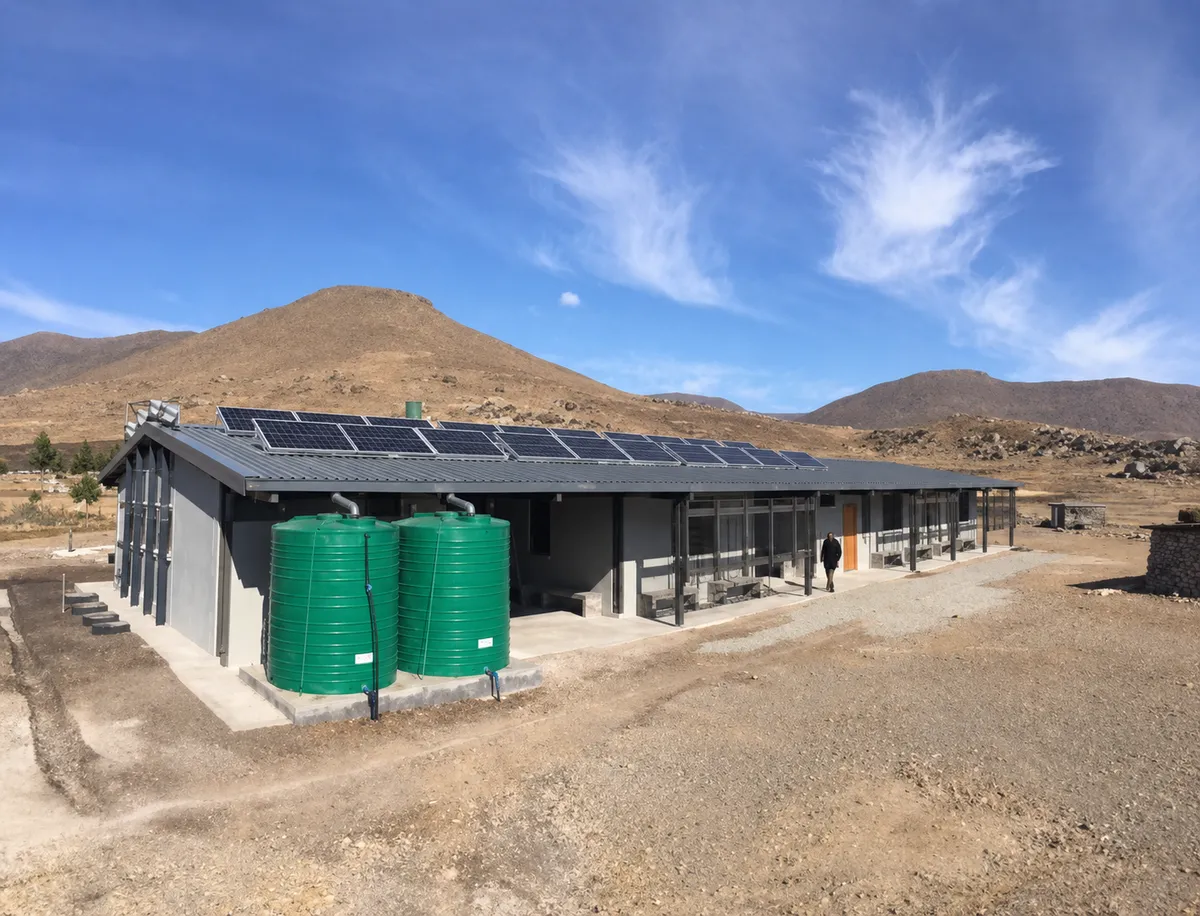
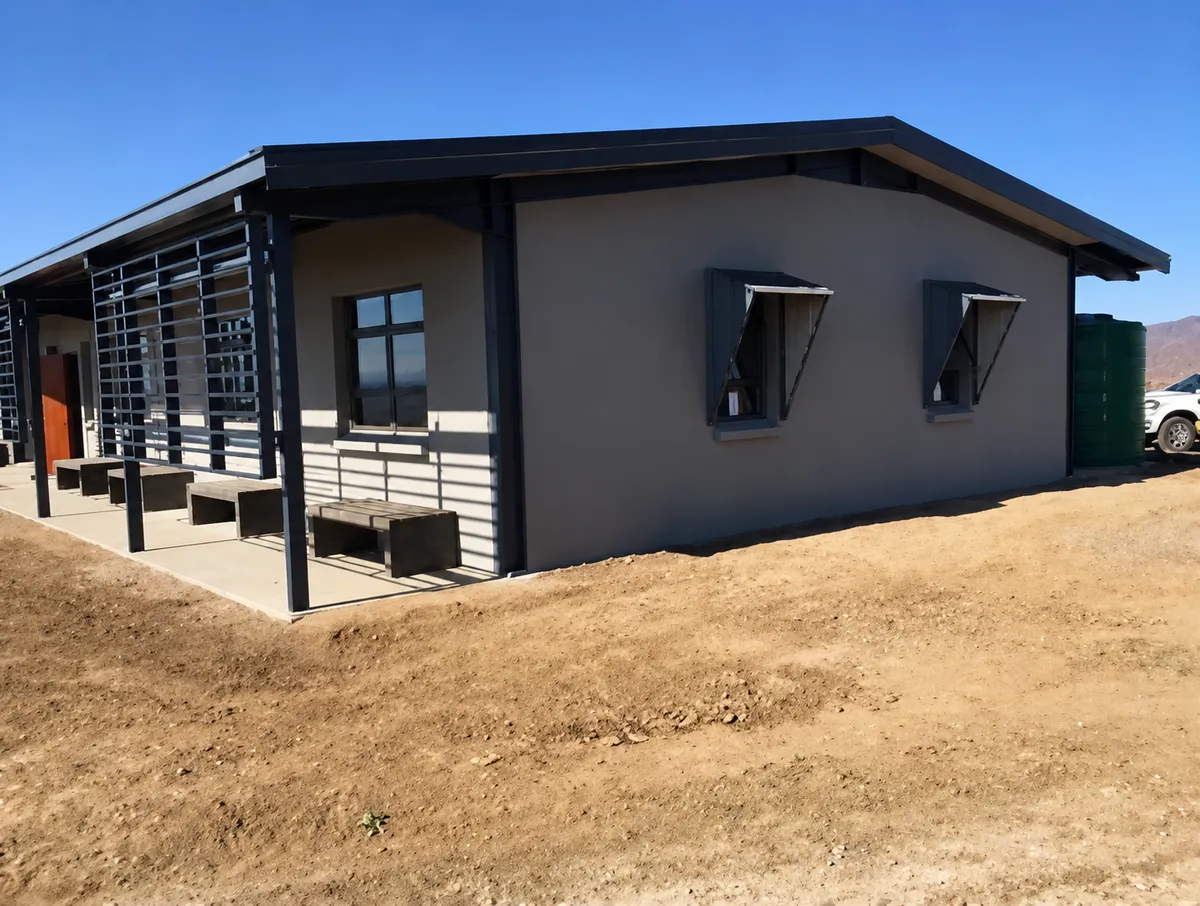
Council and community committees participated in planning before modular buildings were designed and procured. Local materials, shading, natural ventilation, rainwater collection, solar energy and ecological toilets reduced dependence on external services. Construction supervision, user involvement and operation-and-maintenance preparation carried the individual centres towards sustainable local use.
Impact in numbers
Residents can access council services and public meetings in dedicated local facilities instead of travelling farther or relying on unsuitable spaces. Lower-energy and water-conscious design can reduce operating burdens, while local materials and maintenance planning support repairability. The centres make decentralisation more visible, accessible and practical in everyday community life.
Key highlights
- Twenty-eight council centres applied a repeatable modular concept while adapting to their sites.
- Passive cooling and shade responded to climate, solar and rainwater systems increased autonomy and ecological sanitation addressed water constraints.
- Participatory committees connected architectural choices with the people who would manage and use each facility.
Success story
A local-government building should express how a council intends to work: accessible, practical and connected to its community. Lesotho's 28 centres were developed with that purpose. Committees participated in planning, and the modular designs used local materials and climate-responsive features rather than complex imported systems. Shade and natural ventilation improve comfort; rainwater, solar power and ecological toilets help sites function where services are limited. Maintenance preparation gives councils a clearer role after handover. For residents, the result can be a recognisable place to attend meetings, seek information and engage with local administration. Architecture thereby supports decentralisation not as an abstract reform, but as a public service with a physical home.
Impressions