
Flagship project
Building a Safer E-Waste System in Ghana
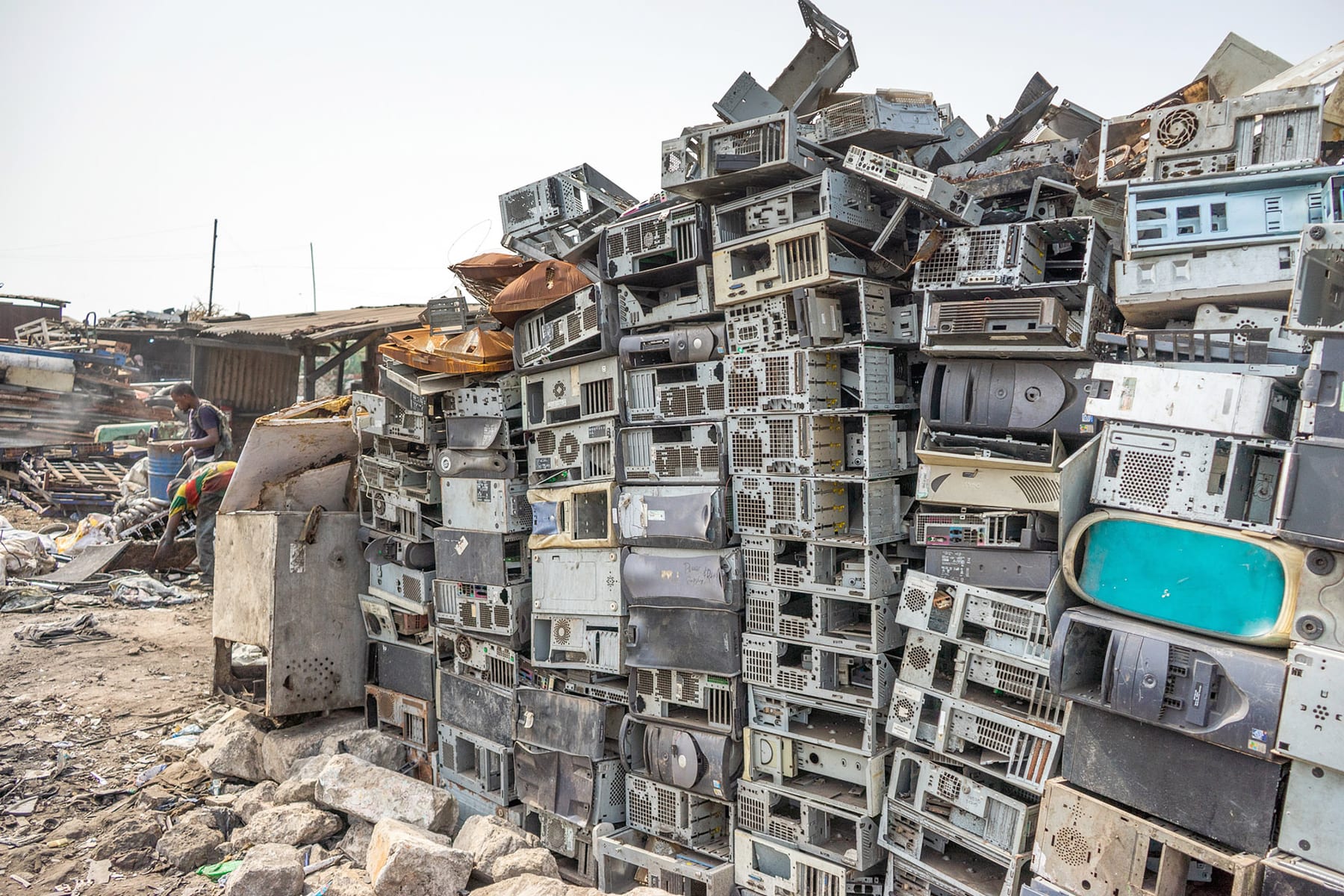
Ghana's e-waste programme develops a safer and more circular system for collecting, recycling and disposing of electrical and electronic equipment.
Workers can gain safer conditions and clearer procedures, while communities face lower exposure to hazardous practices. Producers and importers receive a more defined role in managing products at end of life, and Ghana can recover valuable materials that would otherwise be lost or handled unsafely. Better collection and recycling also reduce pressure on the environment. Circularity is advanced through a system that recovers materials while protecting workers, communities and the environment.
The challenge
Unsafe recycling and disposal of electrical and electronic waste in Ghana create serious risks for health, livelihoods and the environment. A safer system must retain the livelihoods and resource value linked to discarded equipment while replacing hazardous handling with clear responsibilities, standards and organised collection.
Our goal
Ghana's e-waste programme reduces health and environmental risks while protecting livelihoods within the recovery sector. It aims to establish clearer responsibility across the product value chain, improve collection infrastructure and support recycling practices that recover resources without exposing workers or communities to avoidable harm.
Our approach
An institutional framework defines roles and supports extended producer responsibility. Incentives are designed to encourage safer collection and treatment, followed by procurement and supervision of collection facilities. Standards guide technical practice, while training and public awareness help workers, businesses and consumers understand how the new system should operate.
Key highlights
- The programme brings policy and physical services together.
- It will establish producer-responsibility arrangements, collection infrastructure, operating standards and incentive mechanisms, supported by workforce training and public communication.
- This package addresses the entire chain from discarded equipment to recovery or environmentally sound disposal.
Success story
Discarded electronics contain recoverable value, but informal processing can release toxic substances and place workers, families and the environment at risk. Ghana's programme is designed to retain the value while changing the conditions under which it is recovered. Producer responsibility makes obligations clearer, collection facilities create safer points of entry and standards set expectations for treatment. Incentives encourage participation, while training and awareness help people adopt the new arrangements. A positive future would see e-waste moving through organised channels, workers using safer methods and communities exposed to fewer hazards. Circularity then becomes more than recycling volume; it becomes a way to protect health, livelihoods and resources at the same time.