Flagship project
Building Green Agricultural Finance for Climate-Resilient Farming in Bolivia
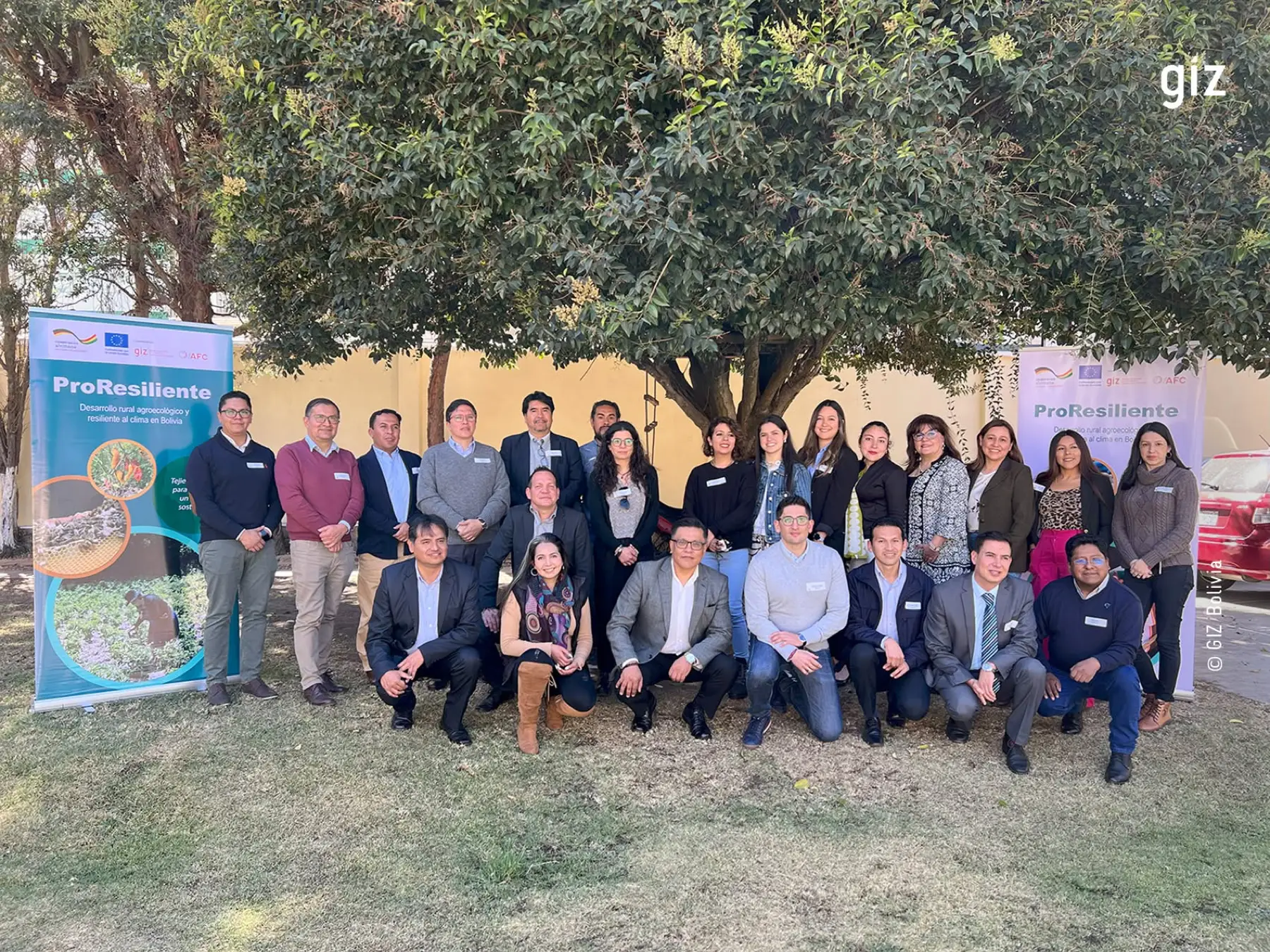
Laying the foundations for green agricultural finance in Bolivia by helping financial institutions develop green loans and strengthening financial education for small-scale producers, especially women and vulnerable groups.
Project achievements
Bolivia is still at an early stage in greening its financial system. The project has therefore focused on building awareness, skills and coordination across the full system: from policymakers and regulators to banks, development finance institutions and agricultural producers.
Key achievements include:
- Bolivia’s first National Sustainable Finance Roundtable established
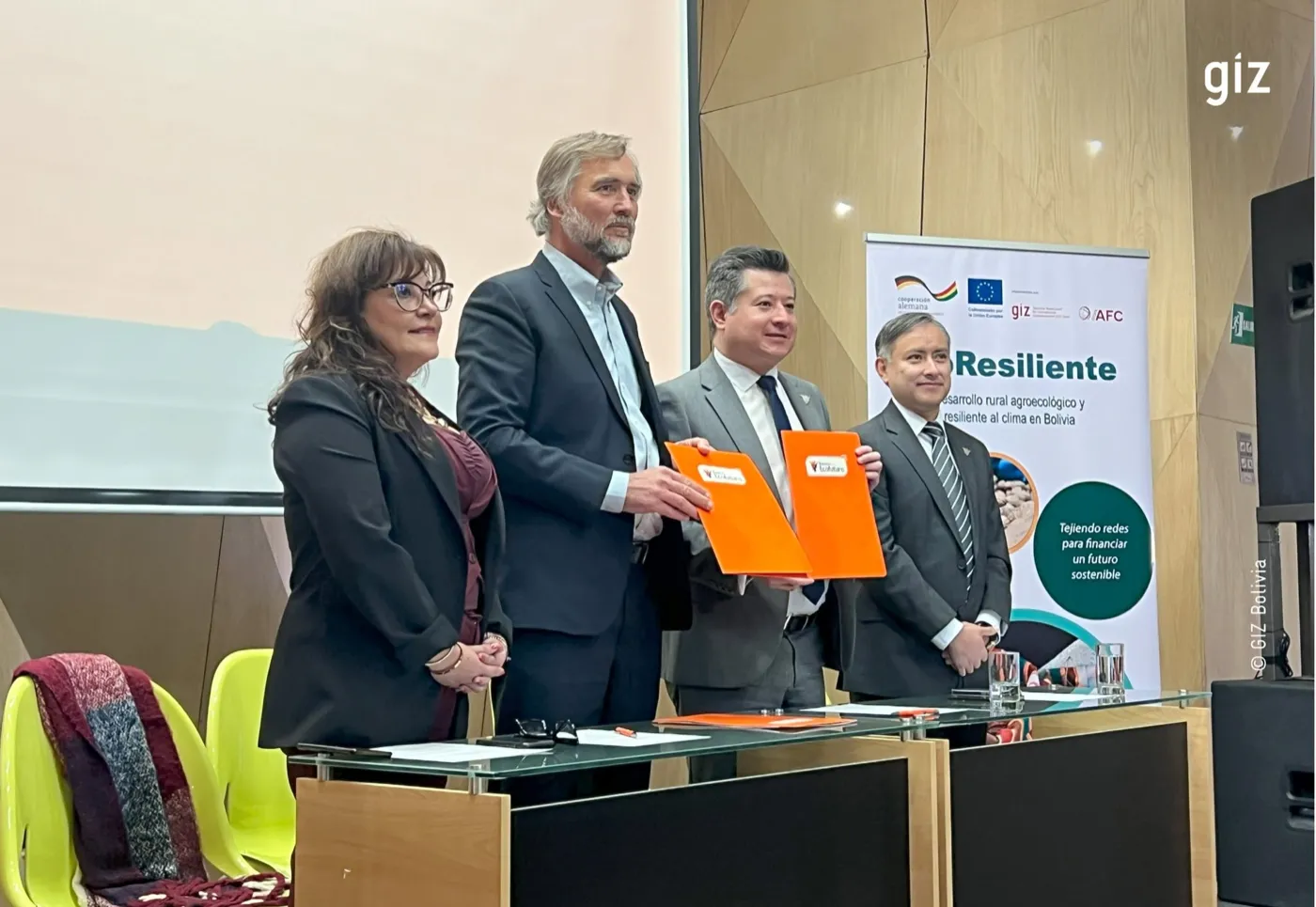
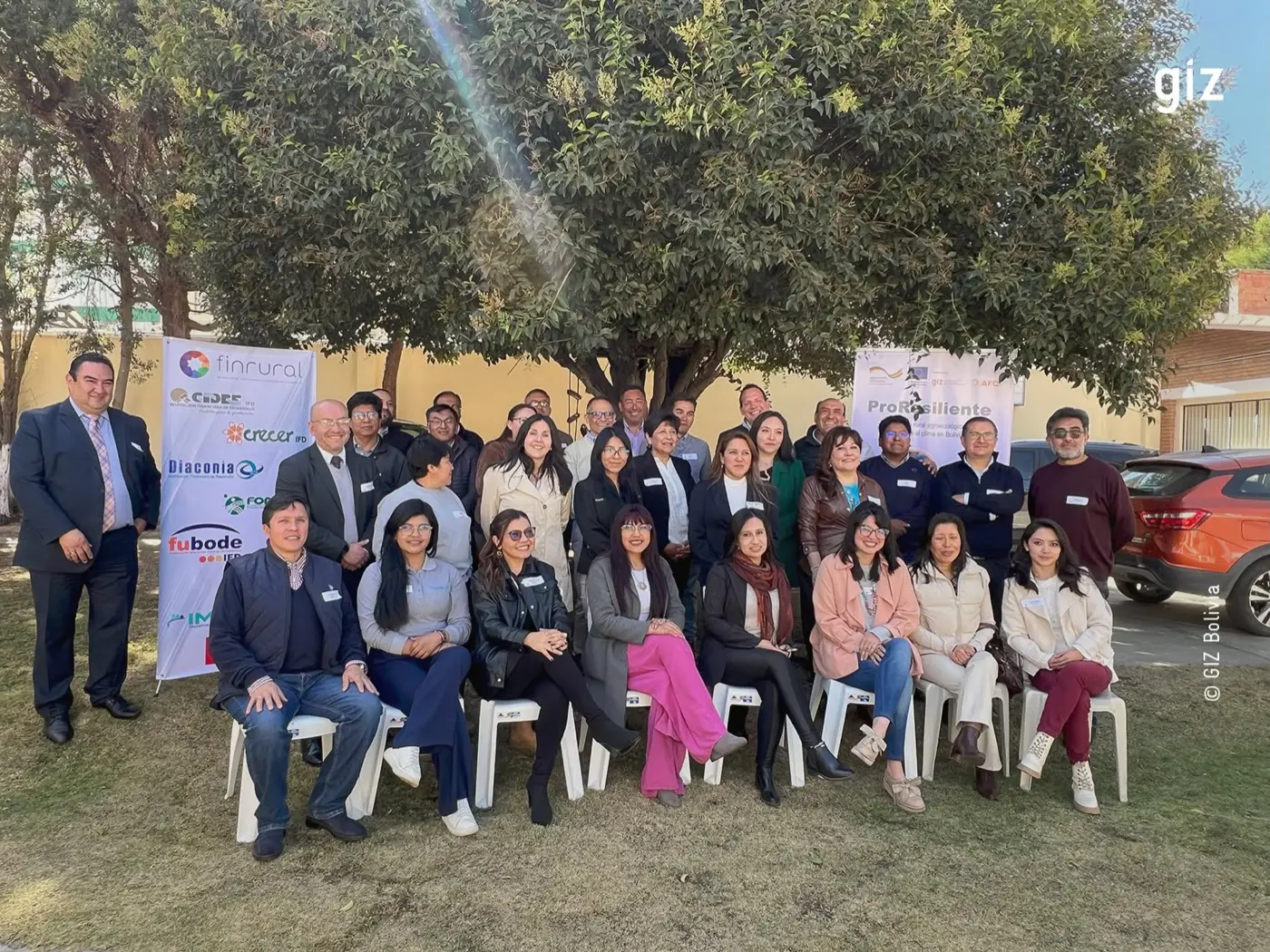
- The Sustainable Finance Development Network of Bolivia created, bringing together ASOBAN, ASOFIN and FINRURAL, with the national development bank BDP as strategic partner
- 50 financial-sector staff trained and certified in environmental and social risk management
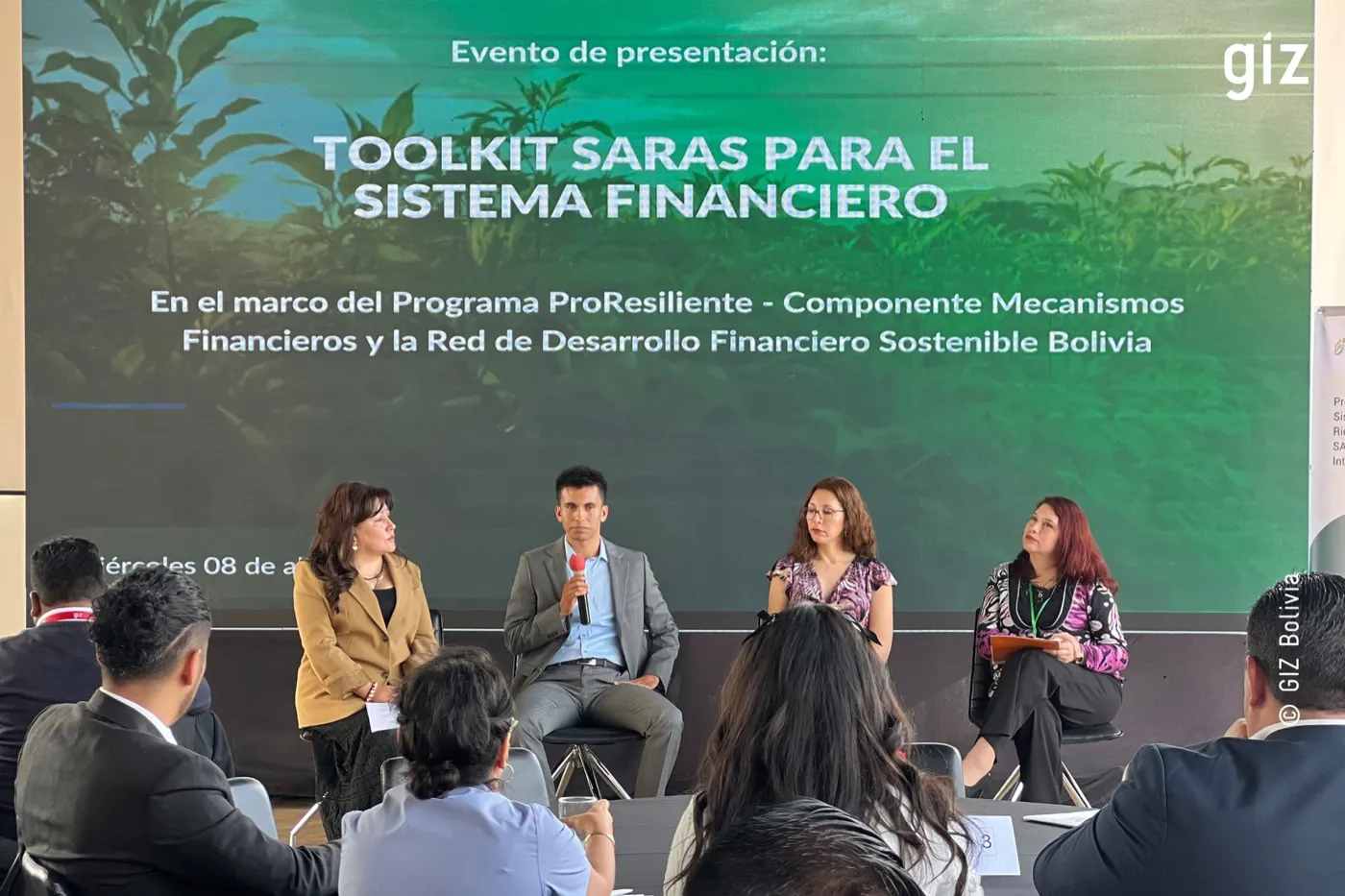
- The first SARAS / ESRMS Toolkit provided to 19 financial institutions
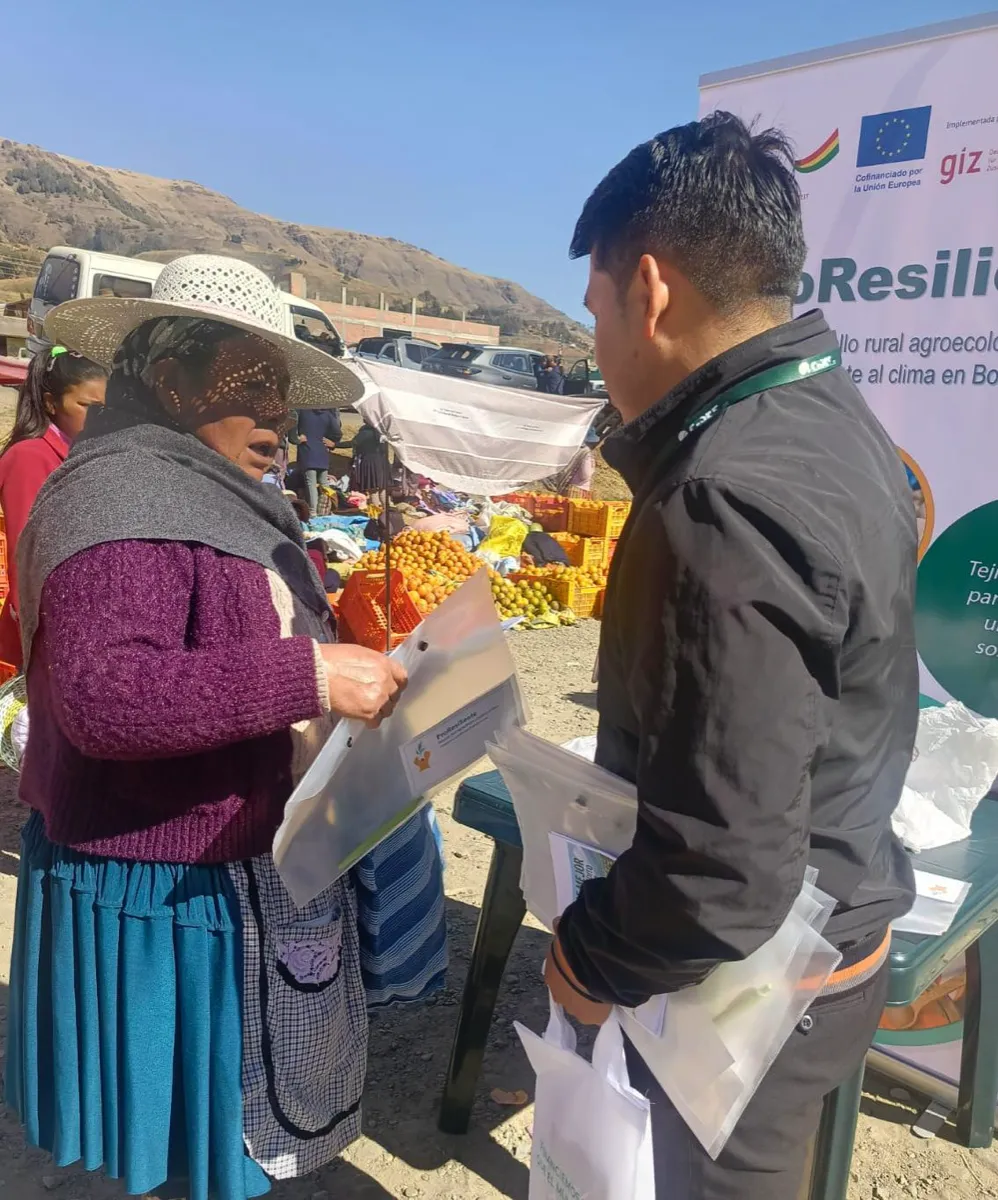
- Two gender-sensitive financial education modules on green credit developed for producers and financial-sector staff
- IFD CIDRE and Banco PYME Ecofuturo supported to develop tailored green agricultural credit products and operational taxonomies
- Pilot implementation planned in nine branches from September 2026
The green loans will support investments in organic fertilisers, soil restoration, climate-resistant seeds and seedlings, crop diversification, integrated pest management, efficient irrigation, water wells, rainwater reservoirs, nurseries and improved livestock production, strengthening producers’ resilience while generating environmental benefits.
The challenge
Bolivia's agricultural sector is increasingly exposed to climate variability and extreme weather, putting rural livelihoods and investments at risk. National climate policy recognises agriculture as a priority for adaptation, but suitable green finance options remain limited. Financial institutions are still at an early stage in developing green banking models for agriculture and need the rules, tools and skills to finance more resilient production systems.
Our goal
Improving access to green agricultural finance for agroecological producers while supporting the greening of Bolivia's financial system. Together with two financial institutions, the project develops green agricultural credit products, strengthens enabling frameworks and builds financial-sector capacities. It also provides practical financial and environmental education for producers and financial-sector staff, with the aim of piloting 200 green loans for rural producers, especially women and vulnerable groups.
Our approach
We work across the financial system: from policy and regulation to financial institutions and rural producers. Market analyses identify green investment potential in agroecological value chains, while gap assessments show where the financial system needs support. Tailored assistance is provided to Bolivia's financial regulator, the national development bank, financial institutions and the newly created Sustainable Finance Development Network. On the demand side, financial education and support to agroecological value chains help producers prepare bankable green investments. Two pilot institutions receive hands-on support to design, test and operate green credit products.
Impact in numbers
Important foundations for green and sustainable finance in Bolivia have already been put in place. These results now provide the basis for piloting 200 green loans for climate adaptation and agroecological production.
Key highlights
- Market and gap analyses completed on agricultural green finance and financial education
- The Sustainable Finance Development Network of Bolivia created, bringing together key financial-sector associations
- A first draft of a Green Protocol developed for the financial system
- Bolivia's first National Sustainable Finance Roundtable established under the leadership of the Ministry of Economy
- More than 700 participants reached through 30 training events on green bonds, environmental and social risk management, green finance and green loan development
- Bolivia's first environmental and social risk management toolkit for financial institutions developed
- 19 financial institutions received the toolkit, and 50 employees were trained and certified
- Working agreements concluded with IFD CIDRE and Banco PYME Ecofuturo
- Two agricultural green credit products and operational taxonomies designed
- Two financial education modules developed for producers and financial-sector staff
Voices from the field
ProResiliente has been a key strategic partner in our journey. Today, Sustainable Finance represents one of the most significant milestones achieved over our 44 years of institutional activity.
The ProResiliente Program helped drive the creation of the Sustainable Financial Development Network, bringing together ASOBAN, ASOFIN, and FINRURAL as founding members. [...] Today, the Network serves as a representative space for coordination and collaboration, enabling continued progress on a shared sustainable finance agenda in the country.
Participating in the SARAS certification program has been a highly enriching experience. The material we gathered and the knowledge we gained from the experts were excellent. [...] It provides us with better tools for the proper implementation of ESRMS, something that is fundamental for our institutions in the times we are currently facing.
Success story
Sowing sustainability to harvest the future
For Daniel Michel Sevilla, National Head of Credit Policy at Banco PYME Ecofuturo, the shift towards green finance began with a major challenge. Bolivia had no green taxonomy, staff needed technical training, and the bank lacked a system to assess environmental and social risks. This made it difficult to connect finance with urgent climate solutions in rural areas.
With support from ProResiliente, the bank began turning this challenge into a new opportunity. Together with the project team, Banco PYME Ecofuturo designed a Green Agricultural Loan and developed its own environmental and social risk management system. What had once seemed like unfamiliar territory became a new business horizon, one that can reduce risks for both the bank and rural producers.
For Daniel, the change is not only institutional. It is also about improving the lives of clients whose crops are increasingly affected by climate shocks.
His story shows how green finance can become a practical tool for climate resilience, business innovation and rural development.
We want to be pioneers in changing our clients' lives through green products and contribute to our country's future.
Daniel Michel Sevilla · National Head of Credit Policy, Banco PYME Ecofuturo
Special features
ProResiliente on LinkedIn
Selected LinkedIn updates offer a closer look at the project's work on sustainable finance in Bolivia: from green credit and environmental risk management to national coordination platforms and financial-sector training.
Impressions